
Trading Idea - Mohawk Industries (MHK)
Hi! How Are Ya? Hi! How Are Ya? Hi! How Are Ya?

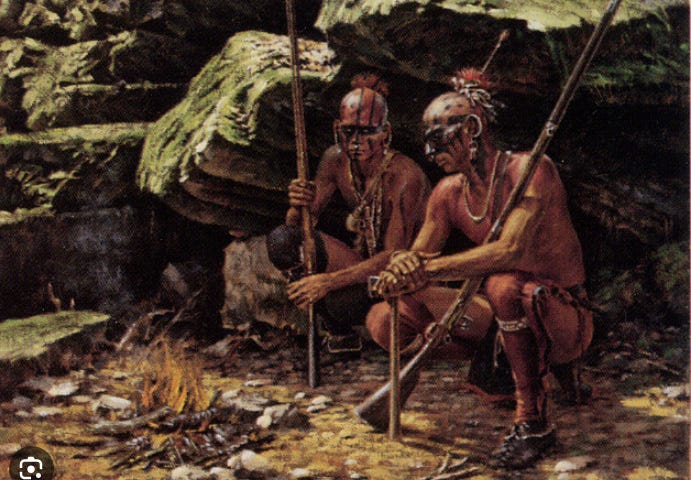
Trading Idea and the Great Beaver War of 1614:
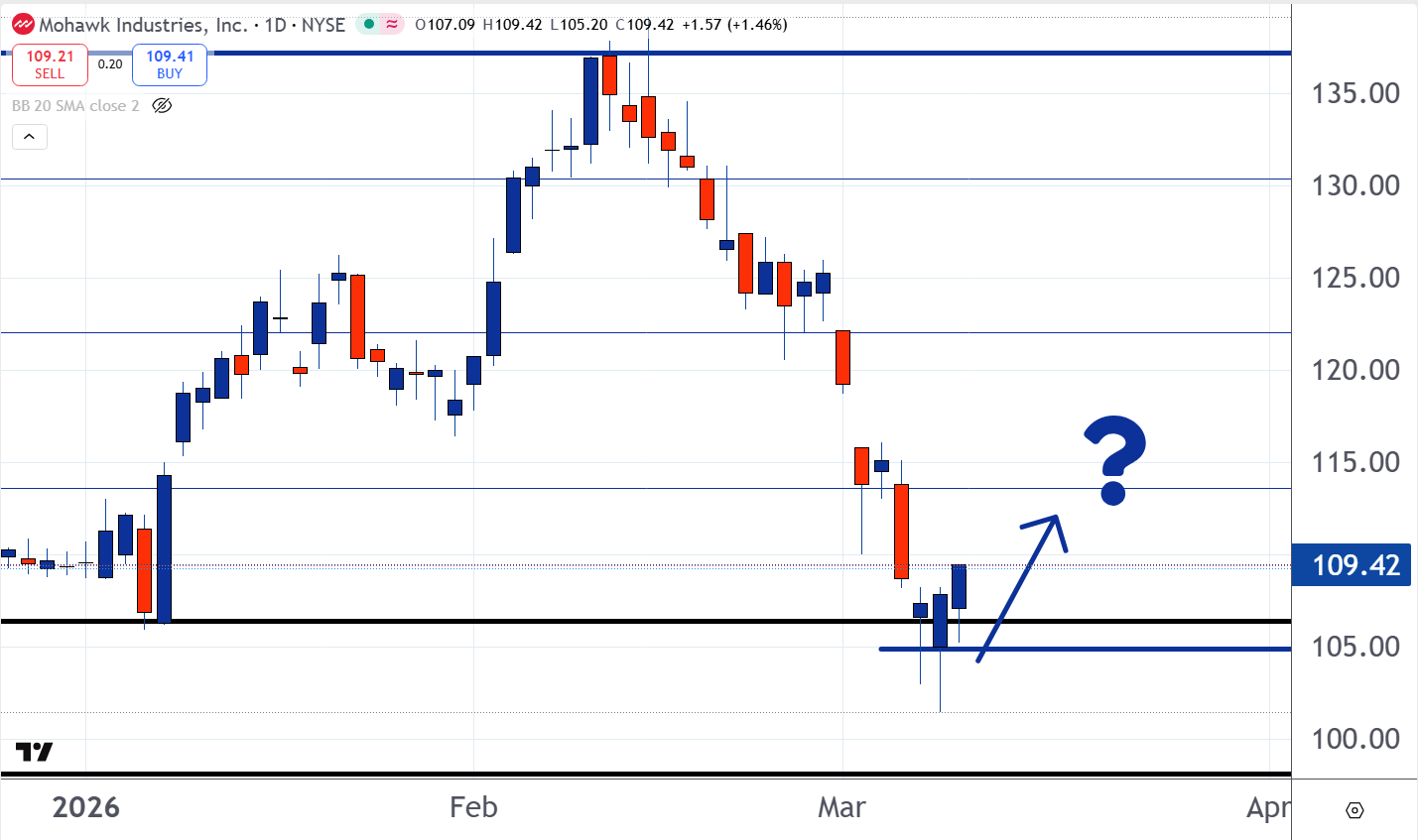
Trading Idea:
The Beaver War:
In the seventeenth century, the Mohawk encountered both the Dutch, who went up the Hudson River and established a trading post in 1614 at the confluence of the Mohawk and Hudson Rivers, and the French, who came south into their territory from New France (present-day Quebec).
The Dutch were primarily merchants and the French also conducted fur trading. During this time the Mohawk fought with the Huron in the Beaver Wars for control of the fur trade with the Europeans. Their Jesuit missionaries were active among First Nations and Native Americans, seeking converts to Catholicism.
In 1614, the Dutch opened a trading post at Fort Nassau, New Netherland. The Dutch initially traded for furs with the local Mohican, who occupied the territory along the Hudson River. Following a raid in 1626 when the Mohawks resettled along the south side of the Mohawk River, in 1628, they mounted an attack against the Mohican, pushing them back to the area of present-day Connecticut.
The Mohawks gained a near-monopoly in the fur trade with the Dutch by prohibiting the nearby Algonquian-speaking peoples to the north or east to trade with them but did not entirely control this.
European contact resulted in a devastating smallpox epidemic among the Mohawk in 1635; this reduced their population by 63%, from 7,740 to 2,830, as they had no immunity to the new disease.
By 1642 they had regrouped from four into three villages, recorded by Catholic missionary priest Isaac Jogues in 1642 as Ossernenon, Andagaron, and Tionontoguen, all along the south side of the Mohawk River from east to west. These were recorded by speakers of other languages with different spellings, and historians have struggled to reconcile various accounts, as well as to align them with archeological studies of the areas.
While the Dutch later established settlements in present-day Schenectady and Schoharie, further west in the Mohawk Valley, merchants in Fort Nassau continued to control the fur trading.
Schenectady was established essentially as a farming settlement, where the Dutch took over some of the former Mohawk maize fields in the floodplain along the river. Through trading, the Mohawk and Dutch became allies of a kind.
During their alliance, the Mohawks allowed Dutch Protestant missionary Johannes Megapolensis to come into their communities and teach the Christian message. He operated from the Fort Nassau area for about six years, writing a record in 1644 of his observations of the Mohawk, their language (which he learned), and their culture.
While he noted their ritual of torture of captives, he recognized that their society had few other killings, especially compared to the Netherlands of that period.
The trading relations between the Mohawk and Dutch helped them maintain peace even during the periods of Kieft’s War and the Esopus Wars, when the Dutch fought localized battles with other native peoples.
In addition, Dutch trade partners equipped the Mohawk with guns to fight against other First Nations who were allied with the French, including the Ojibwe, Huron-Wendat, and Algonquin. In 1645, the Mohawk made peace for a time with the French, who were trying to keep a piece of the fur trade.[9]
During the Pequot War (1634–1638), the Pequot and other Algonquian Indians of coastal New England sought an alliance with the Mohawks against English colonists of that region.
Disrupted by their losses to smallpox, the Mohawks refused the alliance. They killed the Pequot sachem Sassacus who had come to them for refuge, and returned part of his remains to the English governor of Connecticut, John Winthrop, as proof of his death.
In the winter of 1651, the Mohawk attacked on the southeast and overwhelmed the Algonquian in the coastal areas. They took between 500 and 600 captives. In 1664, the Pequot of New England killed a Mohawk ambassador, starting a war that resulted in the destruction of the Pequot, as the English and their allies in New England entered the conflict, trying to suppress the Native Americans in the region. The Mohawk also attacked other members of the Pequot confederacy, in a war that lasted until 1671.
In 1666, the French attacked the Mohawk in the central New York area, burning the three Mohawk villages south of the river and their stored food supply. One of the conditions of the peace was that the Mohawk accept Jesuit missionaries.
Beginning in 1669, missionaries attempted to convert Mohawks to Christianity, operating a mission in Ossernenon 9 miles west] of present-day Auriesville, New York until 1684, when the Mohawks destroyed it, killing several priests.
Over time, some converted Mohawk relocated to Jesuit mission villages established south of Montreal on the St. Lawrence River in the early 1700s: Kahnawake (used to be spelled as Caughnawaga, named for the village of that name in the Mohawk Valley) and Kanesatake.
Kateri Tekakwitha, born at Ossernenon in the late 1650s, has become noted as a Mohawk convert to Catholicism. She moved with relatives to Caughnawaga on the north side of the Mohawk river after her parents’ deaths.
She was known for her faith and a shrine was built to her in New York. In the late 20th century, she was beatified and was canonized in October 2012 as the first Native American Catholic saint. She is also recognized by the Episcopal and Lutheran churches.
After the fall of New Netherland to England in 1664, the Mohawk in New York traded with the English and sometimes acted as their allies. During King Philip’s War, Metacom, sachem of the warring Wampanoag Pokanoket, decided to winter with his warriors near Albany in 1675. Encouraged by the English, the Mohawk attacked and killed all but 40 of the 400 Pokanoket.
From the 1690s, Protestant missionaries sought to convert the Mohawk in the New York colony. Many were baptized with English surnames, while others were given both first and surnames in English.